
Glove Intelligent Assistant
04.03.2026
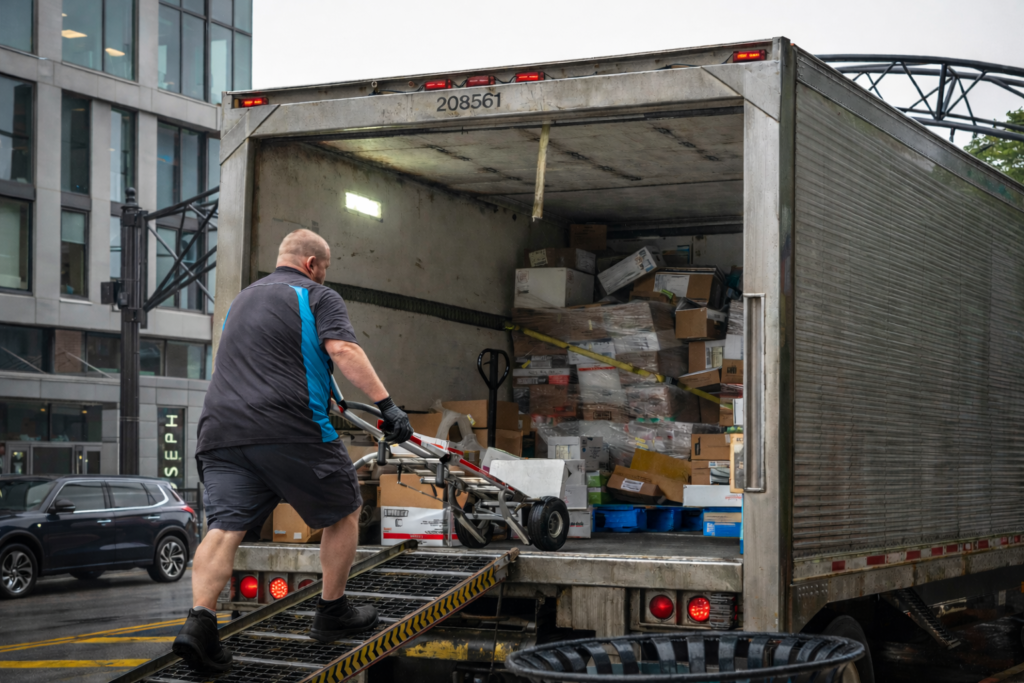
Why contamination starts upstream—and enters your operation unnoticed
Most facilities think about PFAS risk the wrong way.
They focus on what’s happening inside their operation—processes, equipment, and compliance. But PFAS contamination often doesn’t start there.
It starts upstream.
Before materials ever reach your facility, PFAS can already be introduced through suppliers, production inputs, and environmental exposure. By the time it arrives, it’s often invisible—and already part of your system.
PFAS are persistent “forever chemicals” that do not break down easily and can move through supply chains over time.
They can be introduced through:
In food environments, for example, PFAS risk can originate from packaging, equipment, water, and sanitation—long before the end product is finished.
You can run a compliant facility and still inherit PFAS risk.
PFAS doesn’t usually appear as a clear failure point. It enters gradually and accumulates through everyday inputs.
In sensitive environments, even trace levels can:
This is why PFAS is no longer just an environmental issue—it’s becoming a process and quality risk.
What’s changing is how PFAS is evaluated.
Buyers and auditors are now asking:
At the same time, regulatory pressure continues to expand across federal and state levels.
The shift is clear:
PFAS is becoming a purchasing decision—not just a compliance topic.
The biggest challenge isn’t always exposure—it’s knowing where PFAS exists.
Many teams lack clear visibility into:
Without that, decisions become reactive—and risk increases.
Organizations ahead of this are shifting upstream.
They are:
Because PFAS risk is controlled before it enters the facility—not after.
SW Sustainability Solutions helps reduce PFAS uncertainty through transparency and documented insight.
This includes:
The goal is simple: help teams move from uncertainty to informed, defensible decisions.
PFAS risk doesn’t start in your facility.
It enters through your supply chain.
And the organizations that recognize this early are better positioned to reduce risk, improve audit readiness, and maintain control.
PFAS refers to a broad class of chemicals. Testing scope reflects defined analytical panels and not all PFAS substances. Testing and regulations continue to evolve. SW does not claim all gloves contain PFAS.
At SW, we are committed to leading the glove industry in environmental, social, and governance (ESG) practices. Our innovative EcoTek® technology exemplifies our dedication to sustainable solutions, while our expertise in sweat management ensures comfort and performance. We also offer specialized chemical compatibility support, assisting customers in selecting gloves tailored to their unique needs. Our mission is to provide products that prioritize safety, health, and environmental responsibility for our customers and the planet