
Glove Intelligent Assistant
05.05.2026
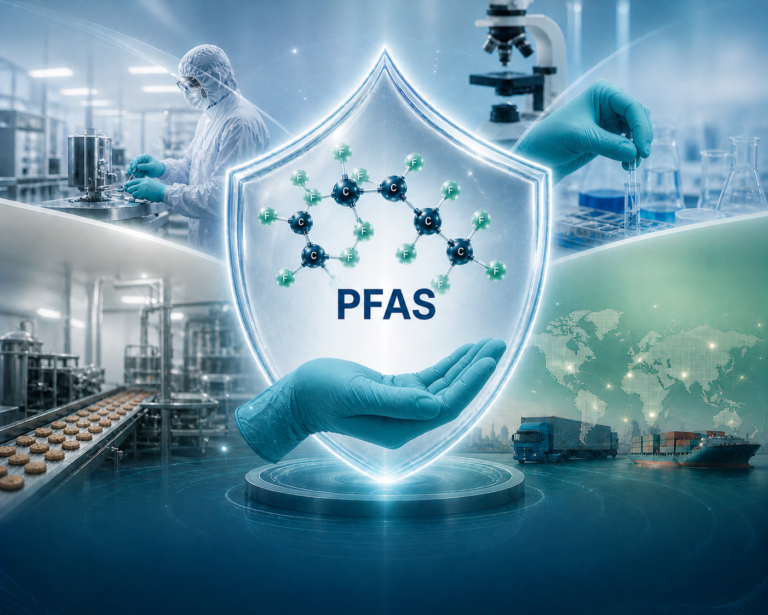
In previous Ask GIA™ blogs, we’ve explained what PFAS (per- and polyfluoroalkyl substances) are and how increasing regulatory attention is shaping their use across industries. But a key question remains:
Where does PFAS-related protection actually matter in real-world applications?
This distinction is critical. PFAS are not a single risk—and not every application requires the same level of control.
PFAS are widely used for their resistance to heat, water, and oil. Their strong carbon–fluorine bonds make them highly durable—but also highly persistent in the environment.
Today, the conversation is shifting. Instead of viewing PFAS as a broad category, organizations are evaluating:
This is why PFAS-related decisions are not universal—but application-driven.
1. Controlled Environments (Pharma & Cleanroom)
In pharmaceutical and cleanroom environments, material traceability and consistency are critical.
In these environments, PFAS considerations are less about broad risk—and more about documentation, consistency, and audit readiness.
2. Laboratory & Research Settings
Laboratories operate with high sensitivity to contamination and variability.
Here, the focus is on reducing uncertainty—ensuring materials do not introduce variables that could affect outcomes.
3. Food Processing & Indirect Contact Applications
In food-related environments, PFAS is increasingly tied to contamination and compliance concerns.
In this context, PFAS considerations support food safety programs and compliance validation.
4. Multi-Site Operations & ESG-Driven Procurement
For organizations operating across multiple regions, PFAS has become a procurement and standardization challenge.
Standardizing materials with clear documentation helps reduce compliance variability and supply chain risk.
Across industries, PFAS is no longer just an environmental topic—it is becoming a purchasing, compliance, and risk management consideration.
Common questions from decision-makers include:
This shift reflects a broader need for material visibility, traceability, and validated information.
PFAS refers to a broad and complex group of chemicals, and testing and regulations continue to evolve.
Rather than relying on broad “PFAS-free” claims, a more practical approach focuses on:
At SW Sustainability Solutions, single-use gloves are evaluated through verified testing across defined PFAS compounds—including PFOA, PFOS, PFHxS, PFHxA, PFBA, and HFPO-DA—aligned with compounds identified by regulatory bodies in environmental and drinking water considerations.
This approach helps support informed evaluation, rather than relying on generalized claims.
PFAS considerations are most relevant in environments where:
In many cases, the goal is not to eliminate risk entirely—but to reduce uncertainty and improve decision-making through transparency and validated data.
PFAS is not a one-size-fits-all issue.
Understanding **where it matters—and why—**allows organizations to make decisions that are not only compliant, but operationally effective.
As regulatory expectations and customer requirements continue to evolve, organizations that prioritize visibility, documentation, and application-specific evaluation will be better positioned to adapt.
At SW, we are committed to leading the glove industry in environmental, social, and governance (ESG) practices. Our innovative EcoTek® technology exemplifies our dedication to sustainable solutions, while our expertise in sweat management ensures comfort and performance. We also offer specialized chemical compatibility support, assisting customers in selecting gloves tailored to their unique needs. Our mission is to provide products that prioritize safety, health, and environmental responsibility for our customers and the planet.