
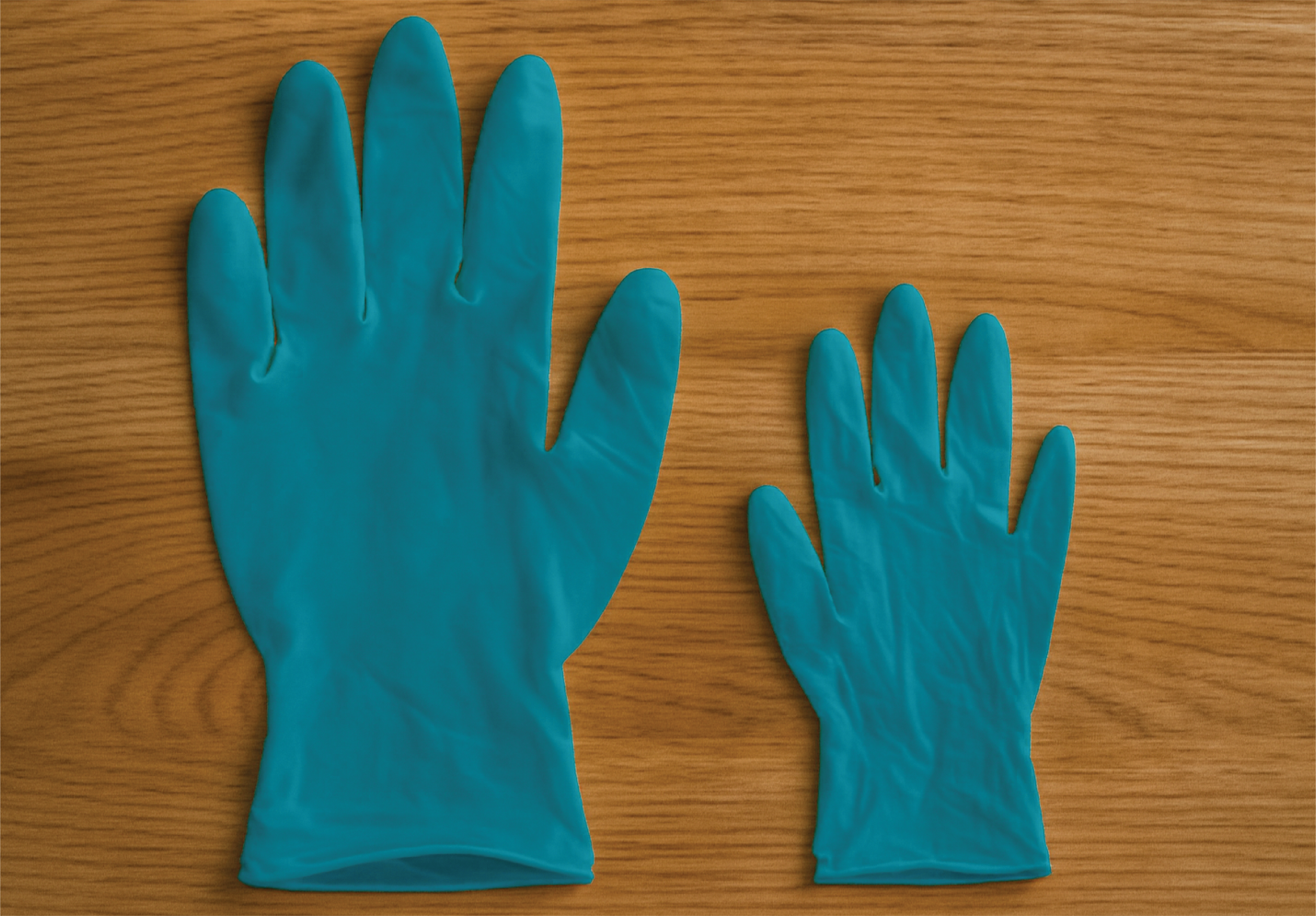
You’ve probably heard the term shrinkflation — when products quietly get smaller or thinner while prices stay the same. It’s been spotted everywhere from cereal boxes to cleaning supplies.
But there’s another industry feeling its impact: disposable gloves.
In the race to cut costs, some glove manufacturers have quietly reduced material thickness, tensile strength, and durability — while keeping prices the same. On paper, the glove could look identical. In practice, it performs very differently.
When Less Material Means More Risk
Across every industry — from laboratories and food processing to manufacturing, healthcare, and cleanrooms — gloves are far more than a formality. They’re a critical barrier protecting workers, products, and processes from contamination, injury, and costly downtime. When glove thickness or quality is reduced, it compounds risk in three keyways:
- More Tears, More Waste
Thinner gloves may save material, but they tear more easily during donning or use. That means more gloves discarded mid-task, more time lost to re-gloving, and higher overall consumption. - Inconsistent Protection
Even small deviations in glove wall thickness can affect barrier integrity and chemical resistance. When formulations change without transparency, safety managers and users can’t rely on consistent protection or performance data. - Hidden Cost of Downtime
Every glove failure interrupts workflow. Multiply that by dozens of workers per shift and you get hours of lost productivity — not to mention increased risk of contamination and injury.
Shrinkflation Hurts Sustainability, Too
Ironically, the effort to save material or reduce cost per glove often increases environmental waste. More frequent glove changes and higher defect rates mean more gloves disposed of — and more resources used to produce replacements.
At SW Sustainability Solutions, we take a different approach. Our gloves are designed for true performance longevity — maintaining consistent thickness, tensile strength, and puncture and tear resistance across every batch. By extending glove life and reducing waste, we help facilities meet both safety and sustainability goals.
What to Look for: Signs of Shrinkflation in Gloves
Not sure if you’re seeing shrinkflation in your supply chain? Here are a few red flags:
- Gloves tearing more easily than before.
- Noticeable differences in fit or thickness between lots.
- Incomplete or vague test data from suppliers.
- Eco claims without verified sustainability standards or certifications.
Transparency Over Shortcuts
SW Sustainability Solutions believes in specification transparency, not shrinkflation. Every glove we make is tested to ASTM and EN standards, and our No-Shrinkflation Guarantee ensures:
- No undisclosed reductions in glove thickness or material strength.
- Verified test data for puncture, tear, and chemical hold-up.
- Consistent formulation backed by ongoing R&D testing.
We design gloves that protect hands — and the planet — without compromise.