
Glove Intelligent Assistant
09.15.2026
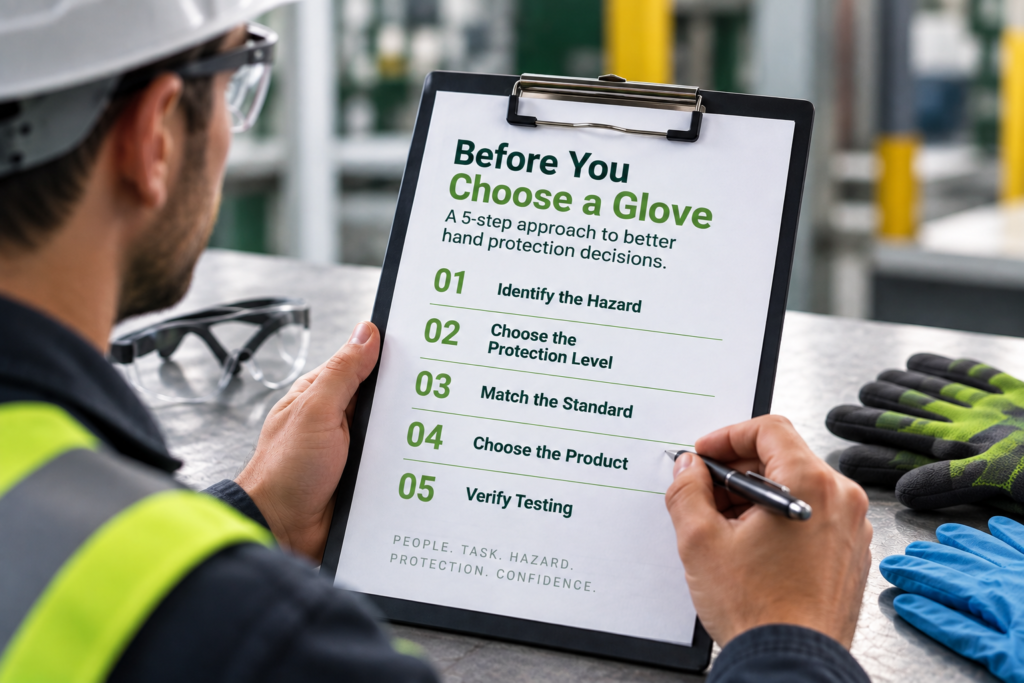
When someone needs hand protection, it can be tempting to start with the product.
Which glove should we use? Which material is best? How thick should it be? What features does it have?
Those are important questions, but they come later in the process. A better hand protection decision starts with something more fundamental: the person, the task, and the hazard they face.
By understanding the need first, Safety and EHS professionals and distributor sales representatives can have more informed conversations about what protection may be appropriate—and why.
Before looking at glove options, understand the work being performed.
Is the user handling chemicals? Working around sharp edges? Performing a task where grip and dexterity are critical? Are puncture, abrasion, contamination, or other hazards part of the environment?
The answers help define what the glove actually needs to accomplish.
This people-first approach keeps the focus where it belongs: protecting the person doing the work, rather than trying to make the application fit a product that was selected first.
Once the hazard is understood, the next step is determining the level and type of protection the application calls for.
Protection is only part of the equation. Fit, grip, dexterity, comfort, material, cuff length, and other performance characteristics can also influence whether a glove is suitable for the work being performed.
For distributor sales representatives, this can also lead to a better customer conversation. Instead of immediately asking, “What glove are you using?” the discussion can begin with, “What are your people doing, and what are they being exposed to?”
That shift can reveal needs that a simple product-to-product comparison might miss.
The next step is understanding which standards and test methods may be relevant to the hazard and application.
Depending on the work being performed, different standards may help evaluate characteristics such as chemical resistance, cut resistance, abrasion, puncture, or other performance requirements.
You don’t need to memorize every standard. What matters is recognizing when a standard is relevant and knowing where to find reliable information to support the evaluation.
Only after understanding the hazard, protection requirements, and relevant standards does the conversation move to the glove itself.
At this point, product specifications and features have context. Material, thickness, grip, fit, technologies, and other characteristics can be evaluated against what the user actually needs rather than in isolation.
This is where SW resources and expertise can help narrow the options and connect the requirements of the application with appropriate hand protection solutions.
Choosing a product isn’t necessarily the end of the evaluation.
Testing results, technical documentation, certifications, and other performance information can provide additional evidence to support the decision. Reviewing that information helps move the conversation from “this glove looks right” toward a more informed understanding of why it may be appropriate for the application.
That’s the idea behind SW’s Before You Choose a Glove framework:
Identify the Hazard → Choose the Protection Level → Match the Standard → Choose the Product → Verify Testing
It’s a straightforward process, but it changes where the conversation begins.
Whether you’re responsible for workplace safety or helping a customer evaluate glove options, you don’t need to begin by knowing which product to recommend.
Begin with the person wearing it.
Understand the work. Identify the hazard. Define the protection needed. Then use standards, product information, testing, and documentation to help make a better-informed decision.
Because when hand protection starts with the people and hazards involved, the product becomes part of the solution—not the starting point.
Explore the 5-Step Framework
At SW, we are committed to leading the glove industry in environmental, social, and governance (ESG) practices. Our innovative EcoTek® technology exemplifies our dedication to sustainable solutions, while our expertise in sweat management ensures comfort and performance. We also offer specialized chemical compatibility support, assisting customers in selecting gloves tailored to their unique needs. Our mission is to provide products that prioritize safety, health, and environmental responsibility for our customers and the planet.