
Ask GIA™ Blog
Glove Intelligent Assistant
11.07.2025
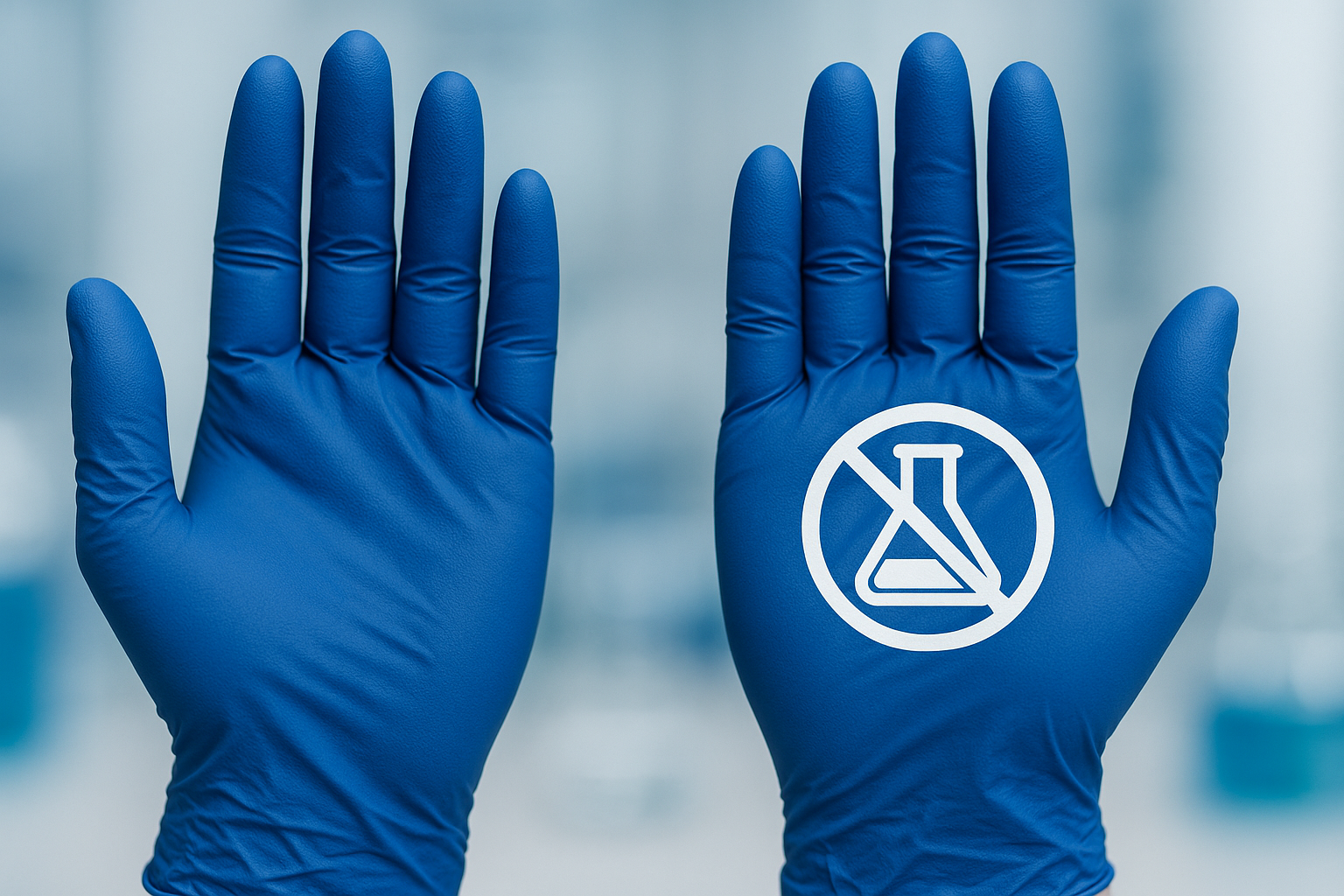
In today’s world, the impact of harmful chemicals on human health has become a growing concern—particularly chemicals known as hormone disruptors. Two of the most recognized disruptors found in various consumer and industrial products are Phthalates and Bisphenol-A (BPA). These substances can interfere with the body’s hormonal balance, potentially leading to reproductive or developmental health concerns.
Understanding Hormone Disruptors in Glove Materials
Phthalates are primarily used as plasticizers to make vinyl-based materials (PVC) more flexible, while BPA is used in certain plastics and resins. These chemicals are most commonly found in low-cost, vinyl (PVC) gloves or other plastic materials produced with inexpensive raw ingredients.
In contrast, Nitrile Rubber (NBR) and Natural Rubber (NR) gloves—especially those made from emulsion-based latex formulations—are highly unlikely to contain Phthalates or BPA. This is because:
- Phthalates are typically used in solid rubber compounds, not in emulsion-based rubbers like Nitrile or Natural Rubber latex.
- They are poorly soluble in water and highly soluble in organic solvents, making their presence in water-based glove manufacturing processes extremely rare.
- BPA and Phthalates are primarily associated with PVC/vinyl and cheap, unregulated production, not high-quality, synthetic or natural latex gloves.
| Glove Material | Phthalates presence | BPA presence |
|---|---|---|
| Vinyl | High (up to 50%) | Possible |
| Natural Rubber | None | None |
| Nitrile | None | None |
| PE (Polyethylene) | None | None |
| TPE (Thermoplastic Elastomer) | None or trace | None |
| PU (Polyurethane) | None | None |